No items in cart
Buy 2 Get 1 Free
Add 3 products to the cart and get the cheapest for free at checkout.
Add 3 products to the cart and get the cheapest for free at checkout.

Hauntology sounds like a strange name for a music genre.
But the term has been used to refer to an elusive group of artists making music in an obscure corner of the internet since the mid-2000s. Despite the air of mystery, one of the genre’s most emblematic artists is a household name in modern electronica.
I’m talking about the hugely influential Scottish act Boards of Canada. Combining hazy nostalgia with evocative electronic textures and a shadowy presence in the musical underground, Boards of Canada remains a touchstone of 90s and 2000s electronic music.
But what exactly made the band and its contemporaries in the genre so unique? How can you capture the sound and what even is Hauntology in the first place?
In this article, I’ll give you a crash course on one of the most mysterious modern genres, sketch out what contributes to Boards of Canada’s unique sound and give some practical tips to capture it in your own music.
Let’s get started.
Hauntology is a term coined by music journalist Simon Reynolds to describe a loose association of artists creating music with a distinctive approach to themes of memory and recollection.
The word comes from the scholarship of philosopher Jacques Derrida, where it refers to the creeping sense that the past lives on to haunt the present with unfulfilled expectations of a better future.
Reynolds first applied it to electronic music in the mid-2000s to describe artists who recycled aesthetic elements of past eras through the lens of nostalgia and the haziness of memory itself.
Rather than a geographical scene or social community, Reynolds characterized Hauntology as a common thread running through the music of a diverse group of artists. William Basinkski, Burial, The Caretaker and the roster of the UK-based Ghost Box label were all included in Reynolds’ original treatment of the concept.
But perhaps the best-known artist associated with the term is Boards of Canada. Primarily active during the late 90s and early 2000s, the now iconic Scottish duo took its name from the retro educational films produced by the National Film Board of Canada in the 70s and 80s.
As I mentioned above, Hauntology is an applied term that doesn’t trace its roots back to a single music scene.
That said, there are clear hallmarks of the genre that pervade the atmosphere of classic Boards of Canada tracks and other releases associated with Hauntology.
Here are a few well-known sonic gestures found across the genre to give you a sense of its core elements.
Library music is the term for stock recordings that were created specifically to be licensed for film and TV soundtracks. Usually recorded on spec by in-house musicians working for labels that specialized in the genre, library music has an eerily familiar sound that’s hard to pin down.
The musicians creating it were technically proficient and the recordings well well produced, but the thematic elements and quirky compositions feel at once innocent and contrived.
Library music has long been a secret weapon for crate-digging producers, but it’s exactly the type of sound that would have accompanied a half-remembered NFB documentary screening in the middle of the night on the BBC.
Whether it’s sampling library music recordings in the case of The Focus Group or imitating the general sonic palette and feel of the compositions, the stylistic influence of library music is one of the ways Hauntology artists play with memory and nostalgia.
The sonic direction of mainstream electronica had veered toward the shiny, frenetic and digital by the time Boards of Canada released their initial albums in the late 90s.
The band deliberately took the opposite approach and embraced the vintage warmth of old-school analog synthesis.
From thick buzzy basslines to warbling leads and warm enveloping pads, the sonic signature of vintage synthesis is all over the Boards of Canada discography.
Hauntology more broadly leans toward simple, single oscillator synth sounds and patch styles that might be considered flat or bland by today’s standards.
Even so, simple sounds can be perfect when they’re programmed well and the approach is often overlooked outside genres that take direct inspiration from the past.
Nearly everything from Boards of Canada’s classic period is covered in a thick layer of lo-fi haze. Think vinyl crackle, tape warble and watery delay and reverb.
Artists across the Hauntology spectrum have used reduced fidelity to reinforce themes of nostalgia for obsolete physical music formats.
Whether it’s deliberately sampling at low sample rates to introduce digital artifacts or the unique use of 78 RPM record samples in The Caretaker’s iconic An Empty Bliss Beyond this World, vintage recording mediums are a shorthand for sound of the past.
Hauntology artists commonly layer even more delay and reverb on top of lo-fi sounds or process entire mixes with tape saturation for a pervasive lo-fi atmosphere.
William Basinski's The Disintegration Loops takes it even further, letting looped sections of tape record over themselves continually until the medium itself destroys the original sound like a distant memory finally fading away.
With the basics out of the way, let’s look at some specific ways to get the particular magic of Boards of Canada’s classic albums in your own projects.
Here are my top three recommendations to get you started.
Evocative ambience and background textures are the bedrock of Boards of Canada’s classic-era vibe.
Whether constructed with synthesis, samples or effects, there’s always a textural thread hiding underneath the beats and melodies of classics like ‘Roygbiv.’
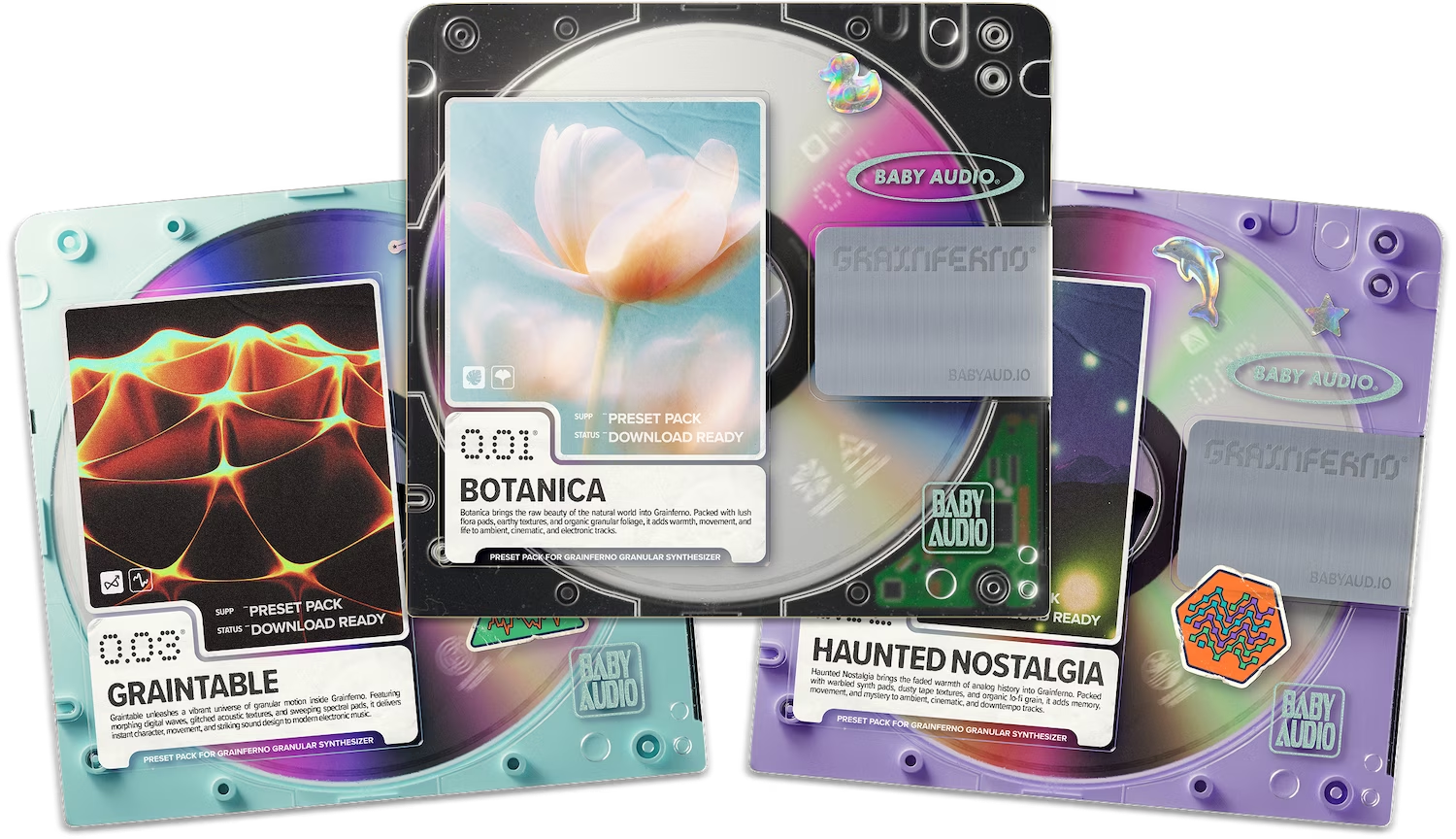
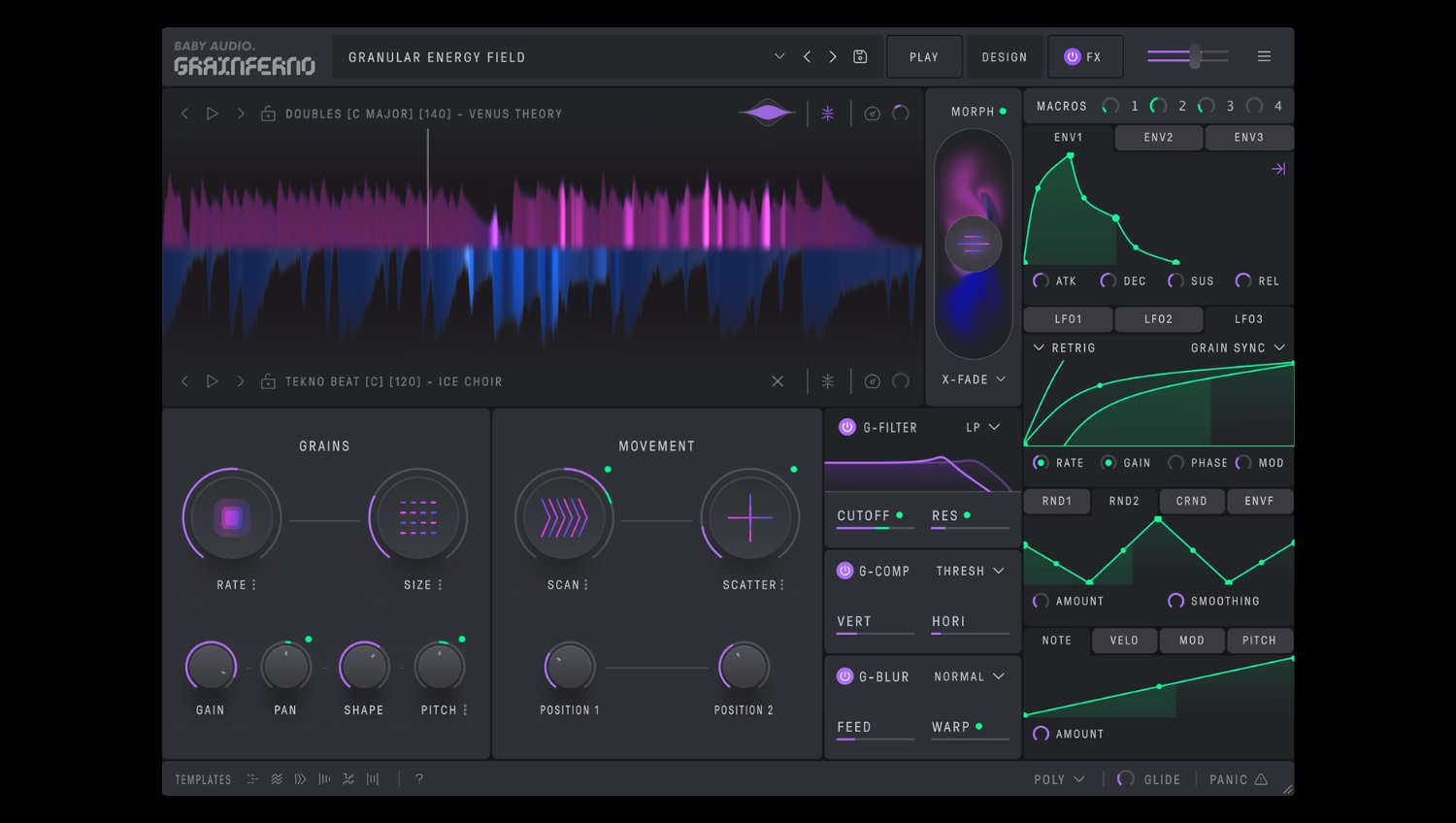
We created the Haunted Nostalgia pack for Grainferno to focus on immersive atmospheres exactly like these.
Try layering in an atmospheric patch to sit behind your main track elements and sidechain your kick to add movement and musical animation.
Every producer’s plugin folder needs a great vintage synth emulation. Vintage-style synthesis remains an important component of nearly all electronic genres, and nailing the sound convincingly is a must.
BA-1 is Baby Audio’s answer to the perfect vintage synth in your DAW. Like the 80s-era portable hardware unit that inspired it, BA-1 is built to be immediate, creative and hands-on from the first try.
With familiar controls and a great onboard suite of effects, BA-1 makes it easy to cop vintage analog sounds with real retro character for BoC-inspired tracks and beyond.
Last but not least, a healthy dose of warbling pitch modulation enhances any hazy trip down memory lane.
Analog formats like vinyl, reel-to-reel and cassette are notorious for pitch and timing inconsistencies, especially after decades of disrepair. Luckily, you don’t need to find a vintage tape deck to get the sound in your DAW.
SuperVHS was built to bring the sounds of 80s-era videocassettes to any track in your session. Use it to add that distinctive pitch warble and warm saturation that makes vintage tape so magical.
And speaking of magic, don’t forget to try the Magic Switch for a healthy dose of one of the most famous analog chorus sounds of all time!
Hauntology may be an obscure genre, but there’s no doubt that memory and nostalgia play a key role in modern music.
As physical formats like CD, vinyl and cassette continue their resurgence in popularity, it’s clear that music’s physical past will live on to haunt its digital future for some time.
If you connect with the sound of Boards of Canada or any of the artists mentioned in this article, mastering the techniques described above is essential.
Now that you understand the basics, head back to your DAW and keep exploring these powerful sonic themes.


.png)
.avif)