No items in cart
Buy 2 Get 1 Free
Add 3 products to the cart and get the cheapest for free at checkout.
Add 3 products to the cart and get the cheapest for free at checkout.

.avif)
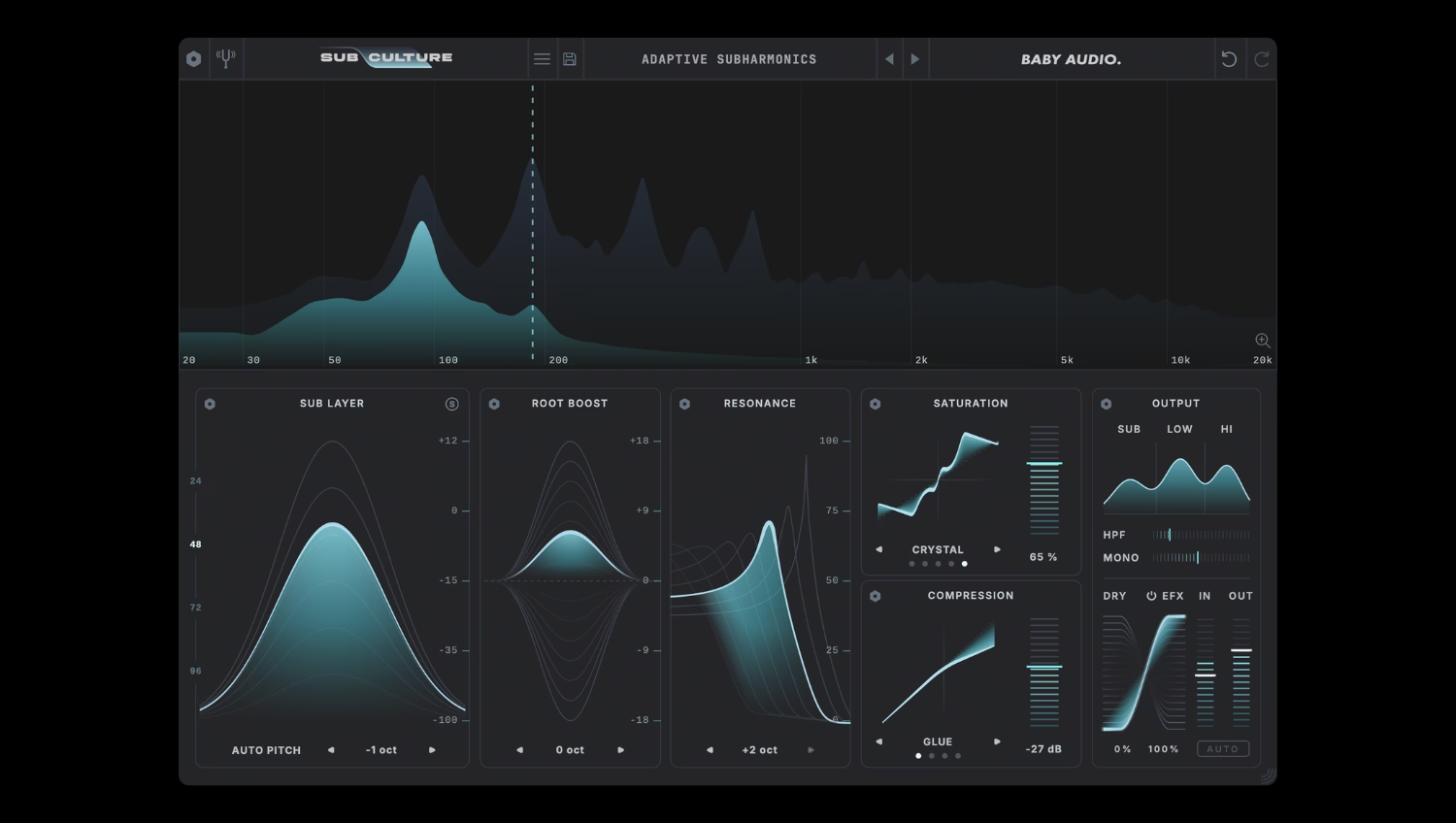
SubCulture is an all-in-one solution for achieving massive low end with monophonic bass signals.
But it’s also a powerful tool for extending the low frequency content in percussive material like kicks, snares and toms.
If you’re stuck with drums that just need more power and depth in the low end, SubCulture is a perfect solution.
In this article I’ll break down how to use SubCulture on drums and suggest four powerful techniques for adding depth, weight and extension to your drums.
When it comes to acoustic drums, capturing deep low end with heavy sustain is not always possible at the source.
While there are tricks like subkick devices and microphones with onboard bass boosts, chances are that you can only capture the actual low frequency content that reaches your microphones in the moment.
This is often plenty for most mixes, but there will always be cases where additional bass extension is called for.
SubCulture is ideal for bringing additional low end reinforcement to bass drum recordings that need a little extra oomph.
To start out, add SubCulture to your kick track or bus and watch for the detected pitch with the Sub Layer active. While SubCulture’s auto pitch detection is optimized for bass signals, it still works surprisingly well on drums.
Even so, if your kick has clearly identifiable fundamental frequency, it’s usually easier to set it directly in fallback mode with the pitch tracker turned off.
While auto pitch is on, you’ll geta quick idea of where to start when setting the frequency manually. Start with the resonance processor, turn auto pitch off and adjust the fallback frequency until you hear the resonance adding sustain in tune with the drum’s fundamental.
From there you can use the drive control to dial in the harmonics and sustain of the resonant filter and add saturation and compression to taste.
When working with one-shot drum samples, it’s common to shift the samples’ pitch to match your track.
But if you’re forced to pitch them up dramatically to make it work, the results can lack low end. In some situations, you may have to extend the frequencies in your sampled drums down to keep them in the bass register.
That’s where SubCulture's pitch-shifting Sub Layer comes in. In extreme cases, extending bass content up to two octaves below the original may be necessary.
As in the above example, you can use the auto pitch detection mode to identify the fundamental frequency of each drum, but setting a manual fallback frequency may give more stable results.
When extending low frequency content with percussive sources, SubCulture’s Sub Layer reproduces the frequency content of the pitched material in the drum an octave (or two) lower than the set fallback frequency.
To make sure the transient stays intact and the pitched content stays in phase, engage the percussive option inside the Sub Layer configuration menu.
You many also want to set the attack control faster to keep the the drum’s onset feeling snappy and dynamic.
The top and bottom snare mics often give you the clearest, punchiest representation of the snare of all the mics on the kit.
As a result, most mixers rely heavily on the snare top in the final balance of sources in the mix.
But the close mics need to blend smoothly with other sources to give listeners a complete picture of the kit. Overheads, room mics and other distance mics sometimes contain more of the pitched body of the drums than the aggressive initial transients captured by the close mics.
This can lead to a mismatch that makes raw snare top mics sound out of place when mixed hot in the overall drum blend.
SubCulture can instantly add emphasis at the fundamental frequency to bring back body without sacrificing transient punch.
Once again, the resonance processor is the place to start. Many snare EQ guides recommend boosting frequency content at 200 Hz or around the drum’s fundamental. But adding resonance by exciting SubCulture’s analog-modeled filter may give you a more convincing reinforcement of the fundamental.
You can create a hybrid of the two techniques by engaging the root boost at the fundamental frequency in addition to the resonance.
If you’re working with loops that contain full drum stems, you don’t have many options to easily add low end to individual elements.
But it’s not impossible to augment low frequencies successfully for full drum loops, especially if you have SubCulture at your disposal.
The auto pitch detection calibration settings feature a helpful range control that lets you limit detection to frequencies within a specific window.
This way, you can easily exclude upper frequencies from detection, helping to isolate kicks, toms and snares for additional low end.
And if things get out of control at any point, you can easily dial back the blend of dry and processed signal to keep the enhanced material in check.
Check out presets like Parallel Punch, Hard House and Subtle Enhancer for starting point with full drum loops or stems.
Drums and bass are the two major low frequency components in most mixes.
Dialing in their low end characteristics and extending them when necessary is an important skill to master.
When it comes to drums that need more power and weight, the tips above can help you when other options aren’t working. SubCulture was built for exactly these situations, so it’s worth a try if you’re struggling to get your bass frequencies right.
Now that you understand the basics, get back to your mix and keep enhancing bass with SubCulture.


.png)