No items in cart
Buy 2 Get 1 Free
Add 3 products to the cart and get the cheapest for free at checkout.
Add 3 products to the cart and get the cheapest for free at checkout.

Mixing bass is one of the most challenging tasks for new and intermediate producers.
Deep, powerful low end is a requirement in modern tracks, but getting it right in a busy mix is easier said than done.
Luckily, there’s nothing inherently difficult about mixing bass properly. Once you understand the basics and know how to use the key tools, you’ll be able to get your low end sounding fat and controlled every time.
In this article, I’ll break down the basics of mixing bass and suggest three techniques to help you achieve professional low end in your mixes.
To start, you’ll need to understand the physical factors at play when it comes to low frequencies.
The spectrum of human hearing ranges from 20 Hz to 20 kHz at its broadest. If that seems like a huge range, it is—in practice, most listeners can’t easily perceive the frequencies at the edges of this range.
In fact, if you listen to a sound lower than 20 Hz, what you’ll hear is more like a series of periodic clicks than a pitched tone.
20 Hz is the limit at which listeners can begin to perceive tones with a clear pitched quality. But even though 20 Hz is theoretically audible, frequencies this low rarely play a role in mixed music.
The reason? Your speakers. It turns out that reproducing very low frequencies is extremely difficult without specialized equipment. Even pro monitoring chains can struggle to get true low frequency fidelity in the ultra low range. And consumer listening systems like Bluetooth speakers, laptop speakers and phones fare even worse!
These physical limitations are part of the reason why mixing bass is so challenging.
True low frequency content is required to give your tracks that broad, open sense of extension that the best pro mixes have. But go too low, and you’re adding frequency energy that can’t be reproduced by most speaker systems, and may not even be perceptible to listeners
So what are the practical limits for low frequencies in your mix? Here’s a quick guide to each frequency area from the lowest of the low up.
30 Hz - Low sub bass - the lowest bass content in your mix. Frequency energy around 30 Hz is more felt than heard and may only be properly audible on large sound systems with robust subwoofers. Low sub bass can contribute positively to a mix, but must be treated with care.
40 Hz - Sub bass - True sub bass frequencies make up the deepest pitched material listeners can easily perceive. Material in this range helps add extension, but must also be properly controlled.
50 Hz - Low bass - This is a key range for multiple instruments in your mix including basslines, kick drums and low toms. You’ll have to decide which elements will be the lowest in the mix to avoid too many competing elements here.
60 Hz - Bass Power - This area is frequently associated with the fullness and power of the bass range and is often boosted for additional impact from kick drums, toms and percussion.
70 -100 Hz - Upper Bass - Frequencies in this range contribute to the timbral character of bass instruments, but they’re also present in many other types of signals. Keeping this range clear of non-bass sources using high-pass filters is recommended.
The best thing you can do to get deep, powerful bass is keep your mix’s low frequency zones clear of material that doesn’t need to be there. In other words, make space for your bass!
When you listen to your source tracks in isolation, it can be tempting to keep all their rich low frequencies intact as you mix. But the reality is that low end energy piles up fast at your master bus, leading to bloated, muddy sound.
Clear out any lows that aren’t playing a foundational role in the bass register of your mix. That means essentially anything that isn’t a kick drum, low tom or bass line instrument. You don’t need to go crazy and high pass every single track in your session, but try to listen for unneeded low end and make the necessary adjustments where it appears.
A good tip is to listen in context while bringing a gentle 12 dB/octave high pass filter slowly up until you notice a negative effect on the sound. You might be surprised how much low end you can cut from some sources.
In the end, only one element in your mix can truly be the lowest.
For most producers, that usually means deciding between the kick drum and the bass line instrument.
There are advantages to either one, but the right choice depends on the genre of the music the and specific sounds used in the track. If you have a harder, more aggressive kick with lots of high end, it could be more natural to choose the bass line instrument for the lowest element in the mix.
Conversely, a bright, melodic bass line might sit better above a low thudding kick drum.
Whichever you decide, leave space for it to occupy the lowest frequencies and extend all the way down to the sub bass.
If your bass line instrument is your choice to occupy the lowest range in your mix, you may need some extra firepower to truly command the sub bass frequencies.
Not all bass sources will naturally extend down to the lowest range of frequencies, but there are some great solutions for augmenting the low end of monophonic signals.
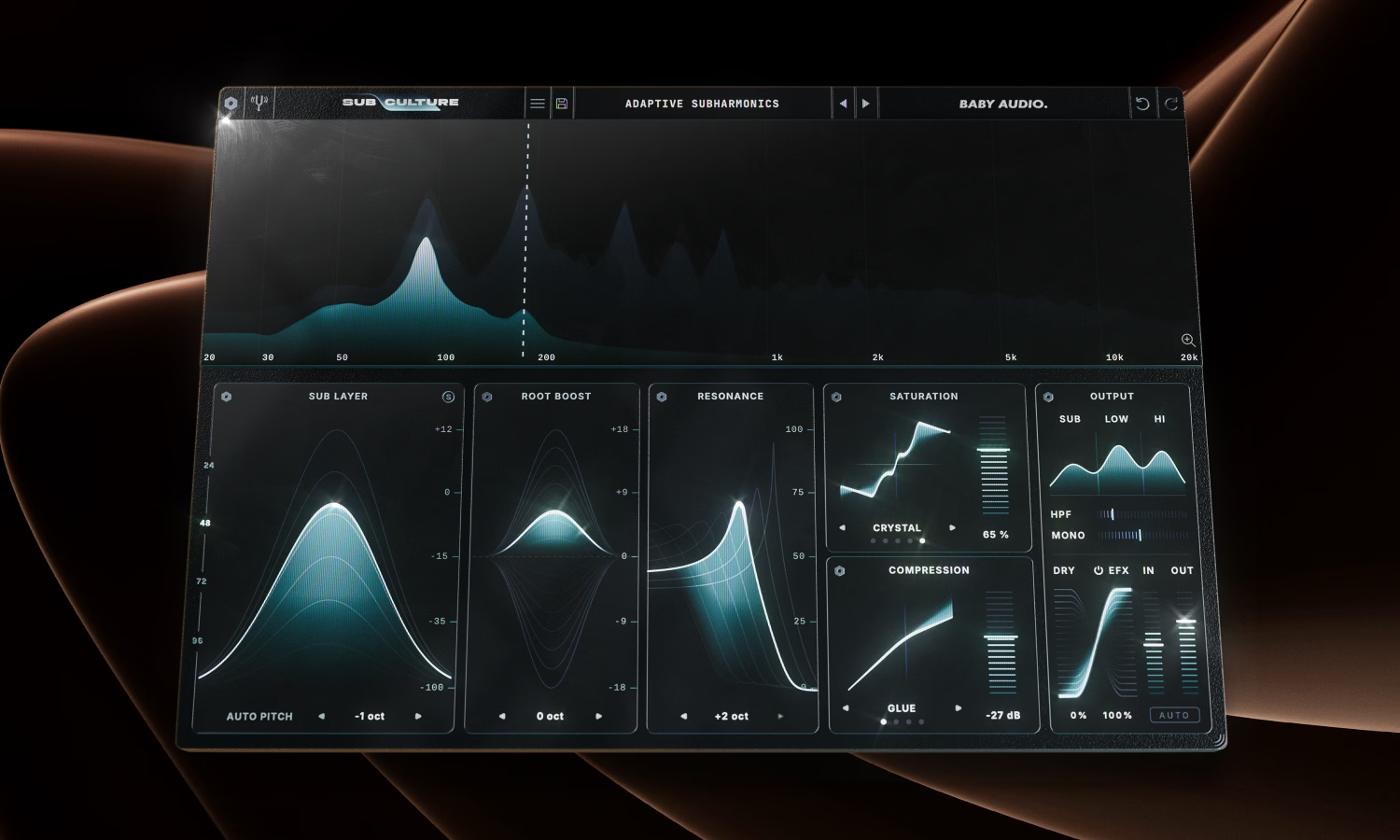
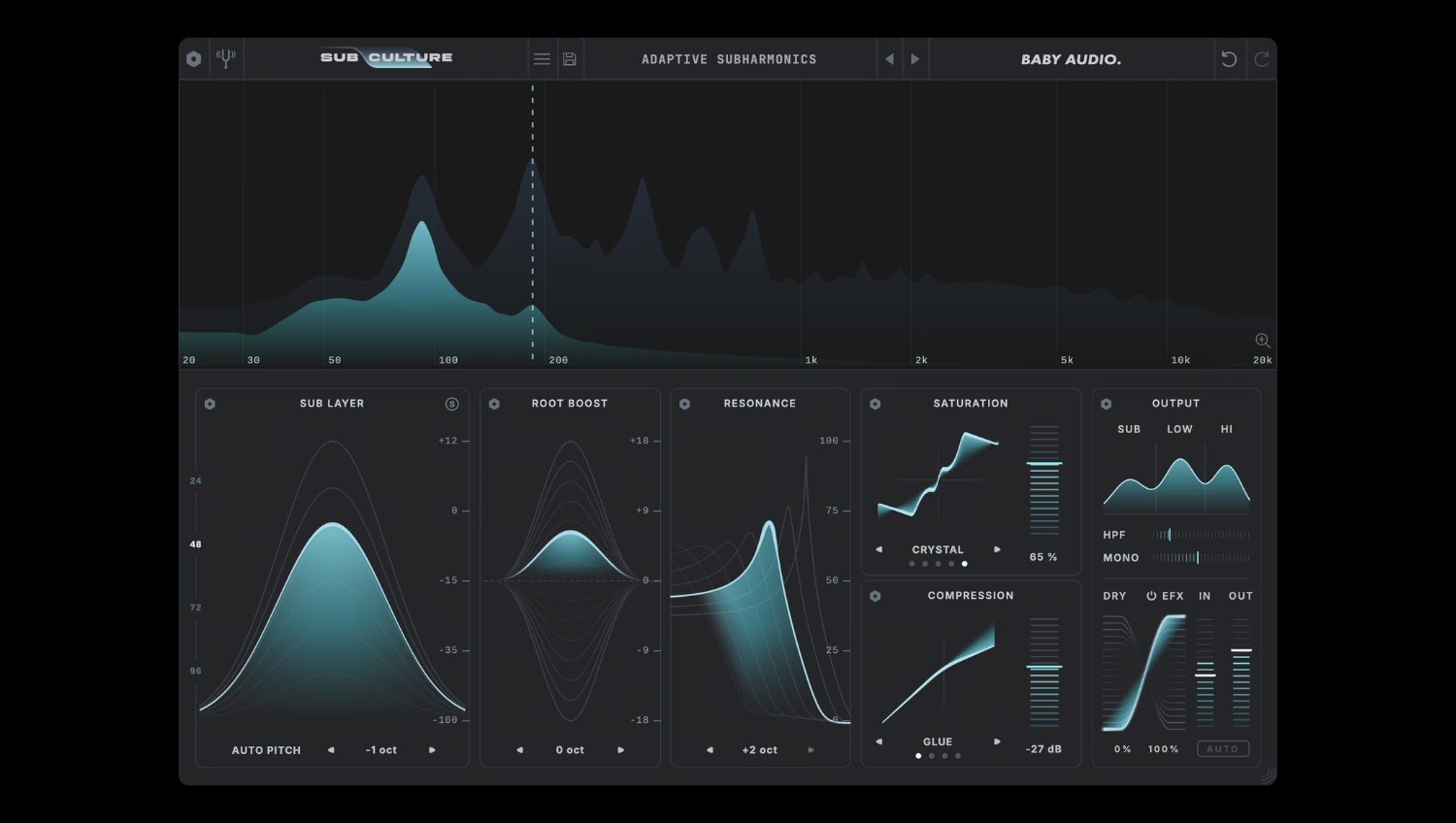
SubCulture is a pitch-tracking bass enhancer designed to extend and emphasize the critical frequencies in your basslines. It automatically detects the pitch of incoming audio and locks its bass enhancing processors to each note, ensuring that it always reinforces the musically important frequencies in your bass.
SubCulture creates a pitch-shifted and processed version of the input signal at up to two octaves below the original. That’s true bass extension that takes the frequency content in the signal down into the subharmonic range.
Add in the pitch-tracking Root Boost EQ and and the analog-inspired parallel Resonance filter and you get a trio of bass enhancing tools that will ensure your bass instruments command the lowest range in your mix.
If you’re looking for subtle extension and emphasis to fill out your basslines, try adding a moderate amount of SubCulture’s Sub Layer at one octave below the original. Add a gentle, narrow Root Boost then dial in the compression and saturation to taste.
From there, drop in the global HPF to make sure the sub frequencies don’t get out of hand and set the blend of wet and dry to your liking. If you’ve been struggling to get true low end extension with your bass instruments, SubCulture makes it easy to get great results.
Check out the free demo or learn more on the official product page.
It takes time to gain confidence when it comes to mixing the lowest frequencies in your tracks. In a way, physics is working against you to make it harder than it seems.
But once you know some key principles and basic techniques, mixing bass shouldn’t feel intimidating.
Try the tips outlined in this article if you’re struggling to get that deep and powerful low end that sounds professional. And if you need to bring more bass to the party, SubCulture is one of the best options available for enhancing bassline instruments.
Now that you understand the basics, get back to your DAW and keep mixing your bass.


.png)

.avif)