No items in cart
Buy 2 Get 1 Free
Add 3 products to the cart and get the cheapest for free at checkout.
Add 3 products to the cart and get the cheapest for free at checkout.

There are as many types of delay plugins as you can imagine when it comes to the options available for producers today.
But if you’re looking for the right one for a specific situation, you may be wondering what makes delay plugins different from one another.
Although delay is a well-known effect, producers who are just starting out might not know the key types of delay and the differences between them.
In this article, I’ll lay out each of the most common types of delay included in delay plugins, explain how they’re used, and suggest ideas for bringing them into your own workflow.
Let’s get started.
Delay is a type of audio effect that records a brief section of an audio signal and plays it back later in time.
Delay effects typically include variable delay time as well as feedback that routes some amount of the delayed signal back into the input, creating a cascading effect.
When mixed with the dry signal, the delayed repeats simulate the natural echo of long narrow spaces in the real world like tunnels and caves.
Delay is one of the most common effect types and has been in use since the earliest days of music production with tape-based effects units starting to be used in the mid twentieth century.
Today, delay is found most often in plugin form and is considered an essential tool in mixing for everything from vocals to percussion.
Delay is used in mixing to create a sense of space and dimension that helps situate a sound in the virtual space of the track.
Some delay plugins accurately simulate natural echo, but stylistic delay effects usually take it much further than what’s possible in a real physical space.
For example, very long delays with expansive feedback and stereo modulation can create enveloping textural soundscapes that seem to go on forever.
Even so, it’s not always necessary for delay to be used for ambient sound.
Many mixers opt to use short single repeat delays in place of reverb for a unique small room effect called slapback.
Here’s a quick overview of the key uses of delay in mixing:
With the basics out of the way, let’s talk about the different types of delay.
Although all delay effects work according to the same general principle, the specific characteristics of the repeats vary widely between types.
Consider an old school tape delay. These were like tiny tape recorders that could vary the distance between the record and play heads for delayed repeats on a closed loop of tape.
The recording quality was lo-fi to begin with, but the motor and other mechanical parts in these compact units weren’t perfect either. The result was a murky, warbling quality to the repeats with unique warmth and depth.
Contrast that with a modern digital delay that offers 24 bit/96 kHz resolution. Those repeats would be utterly pristine!
Even though the digital repeats might technically be more accurate, tape-style delays are still sought after today.
The main difference between delays is the quality and character of the repeats. It may not seem like a big difference, but the result in a mix can be significant.
Here’s a breakdown of each delay type and the way it’s commonly used in mixing.
As I mentioned in the example above, digital delay has the cleanest, most accurate sound since each repeat is a high fidelity copy of the original signal.
Digital delay doesn’t have as much character as the types that emulate vintage hardware, but it can be just as useful.
Digital delays often offer extensive stereo features and modulation options as well as other features that make them more flexible than other types on this list
This makes them great for adding extra space without introducing additional coloration or muddy frequency content.
Plus, you can often reduce the extreme highs and lows of the repeats using the tone controls to simulate the narrower bandwidth of other delay types.
Some modern digital delays even offer recreations of early digital hardware that its own sonic quirks some engineers find pleasing.
Use digital delay anywhere that calls for clear hi-fi repeats that won’t get in the way.
The other example from above, tape delay is modeled on vintage magnetic tape echo units.
Tape delays are still sought after today for the same reason many mix engineers revere analog tape recording machines—it has a special magic quality that only comes from magnetic tape.
Between the subtle compression and saturation, the warbly unpredictable pitch modulation and the pleasing high and low-end roll off, tape-style delay is one of the most musical types of delay.
Use it wherever colorful and stylish repeats are required to make a part stand out.
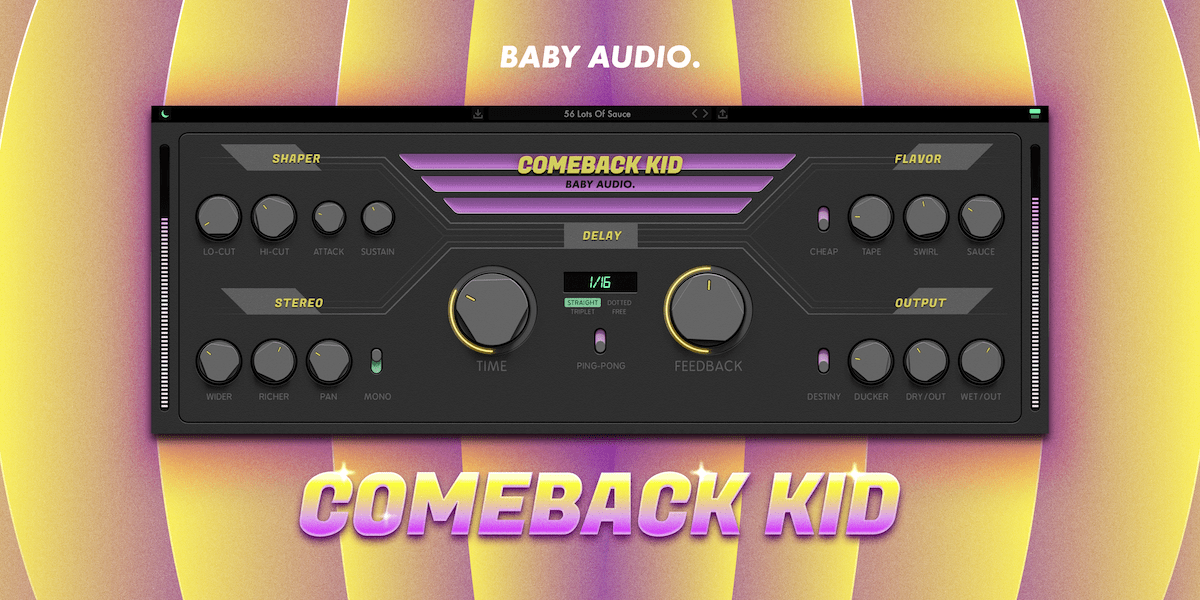
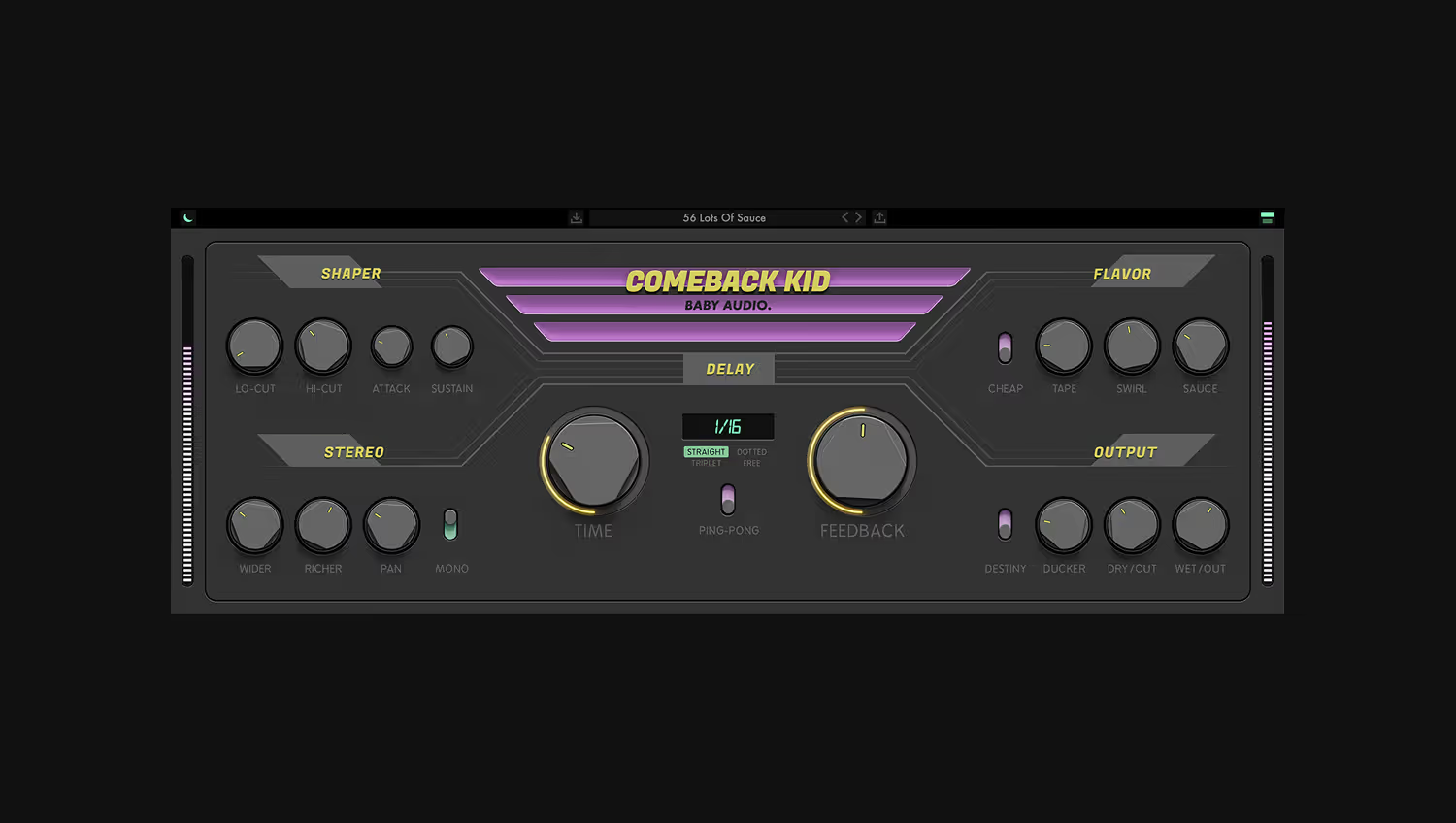
And if you’re looking for a great tape style delay plugin, Comeback Kid is a cult favorite among mix engineers.
With flexible character controls for every shade of tape-style delay and beyond, Comeback Kid is inspiring and simple to use.
Give it a try for free and see what real tape-style delay can do in your own sessions.
Tape echo machines were somewhat portable, but they still weren’t easy for musicians to use and maintain on the road.
In the 1970s, IC chip technology made new methods of delay possible in a compact form factor.
Bucket brigade devices or BBD chips used a novel concept to store information for just enough time to enable workable delay effects.
They work by passing the signal along a chain of capacitors, one step at a time, using a clock to move the charge forward like firefighters passing buckets of water down a line.
The result is a unique lo-fi delay with distinctive artifacts and not much delay time available.
Despite the limitations, BBD analog delay is another sought-after sound and classic guitar pedals like the Electro Harmonix Deluxe Memory Man have been used in studio settings for decades.
If you’re looking to capture any of these recognizable classic sounds or you just need repeats with undeniable vintage character, BBD-style delay should be on your list to try.
Many delays include features to vary how the repeats appear in the stereo field.
But one of the most common is called ping-pong delay. In this configuration, the delay repeats bounce between the left and right channels, creating an immersive surrounding effect.
Ping-ponging repeats can interact in interesting ways with rhythmic passages and add expansive stereo width to any source.
Comeback Kid comes with a built-in ping-pong mode, letting you easily combine vintage-style repeats with modern stereo features.
The result is a rich delay that can add interest to any melodic line that needs stylish ambience and width.
Reverse delay inverts the playback direction of the recorded material so the repeats play backwards as they decay.
The result is a psychedelic effect that’s reminiscent of the classic tape trick of playing a recording in reverse.
Reverse delay can give you the “Are You Experienced?” backwards solo sound on demand, but it’s also a great way to keep delay repeats from interfering with percussive material.
Since the reversed audio starts with the sound’s fading tail and ends with the transient played backwards, reverse delay creates a naturally smooth envelope with the added texture of the backwards audio.
Some reverse delays include other ways to manipulate the delay playback such as playing the repeats at double speed.
In this setup, the cascading echoes get shifted up an octave every time they feedback, leading to a shimmering runaway octave effect.
Sometimes called “ice delay,” this flavor of reverse echo can add a celestial halo to any source signal.
Multitap delay is an interesting delay type that creates patterns of repeats with distinctive rhythms.
To go back to the metaphor of tape-style delay, multitap is like adding additional playback heads along the tape path that “listen” to the delayed signal at different points in time.
In fact, that’s exactly how multitap delay worked on the earliest units of this type, such as the Roland RE-201 Space Echo.
With its seven distinct modes, the Space Echo had several multitap configurations that produced familiar patterns heard on classic recordings.
These days, advanced multitap delays can use many more taps since they aren’t limited by the physical hardware of a tape echo.
Spaced Out’s delay section offers a flexible take on multitap delay that’s capable of creating intricate rhythmic patterns from even a simple melodic line.
Try Spaced Out for free to see it for yourself!
Delay is so fundamental to audio effects that it's no wonder developers keep looking for new and innovative types of delay.
From the earliest tape echoes to modern delay workstations, you’ll need at least afew delay plugins in your arsenal to cover all the bases.
But if you’ve made it through this article, you’ll have a solid foundation for choosing which delays to use and which plugins to work with.
Now get back to your DAW and add some delay to your tracks!


.png)
.avif)