No items in cart
Buy 2 Get 1 Free
Add 3 products to the cart and get the cheapest for free at checkout.
Add 3 products to the cart and get the cheapest for free at checkout.


Sequencers were the original devices for storing patterns of musical notes.
First created in analog form to generate repeating sequences of voltages, sequencers quickly became a cornerstone of creative synthesis from the original era of modular to today.
But what exactly is a sequencer? How are they used in modern production and what are their benefits?
In this article, I’ll explain everything you need to know about sequencers and suggest some inspiring ways to use modern sequencers in your DAW.
Let’s get started.
A sequencer in its simplest form is a device for cycling through stored values according to a set rate.
Sequencers first appeared in the early modular synthesis era as simple modules with a maximum of 8 possible steps.
The designers of the original sequencers first intended them as modulation sources to be connected to amplifiers or filters, rather than for storing patterns of notes. When used this way, sequencers can be a powerful sound design tool in synthesis applications.
But artists quickly realized the promise of melodic sequences and devices began to appear allowing step input of note sequences in CV/gate format and later, MIDI.
Today, the term “sequencer” can refer to everything from Eurorack modules in the mould of the original modular concepts all the way to full-fledged DAWs. After all, your DAW’s MIDI recording and editing functions are still fundamentally for storing patterns of notes!
As music technology developed, sequencers came to play an important role in the adoption of hardware devices. Roland’s TR-808 and 909 drum machines pioneered an easy and creative approach to sequencing rhythm patterns that is still used today in many drum machines.
With the shift to modern DAWs, today’s plugin designers are bringing new approaches to sequencers. You can now find sequencer plugins built to emulate classic workflows or brand new creations meant to push sequencing into the future.
Sequencers cycle through stored values by advancing step by step according to the rate of a clock signal.
In some sequencers, the clock signal may be set in Hz, but it’s more common to see a BPM value with selectable tempo divisions or multipliers.
Typical sequencers have a set number of steps, with the most common choices being 8 or 16 for hardware devices, though more are common in plugin sequencers.
In classic modular-style sequencers, each step can be set freely in continuous values. This is helpful when you want to use a sequence as a modulation source, but note that it won’t be constrained to notes in the chromatic scale!
This type of sequencer requires a quantizer module to snap the CV output values to notes in the musical scale. For this reason, the term sequencer is more typically associated with step or pattern input devices meant for creating musical sequences.
As sequencers developed, they began to show up as standalone devices or built-in features on keyboard based synthesizers.
Instead of setting values with rotary knobs or sliders, keyboard sequencers allowed step input using the keyboard and incorporated various pattern editing features like rests, ties and dotted rhythms.
Arturia’s Keystep series is a good example of a modern sequencer in this style.
And as I mentioned above, many producers are familiar with so-called “X0X-style” sequencing for rhythm patterns that first appeared with Roland’s legendary 80s-era analog drum machines.
In these sequencers, each of the available 16 slots can be activated to engage a hit on an instrument’s lane, making complex beat creation easy.
Finally, as sequencing became a more significant part of music production, full-fledged graphical pattern editors like the original Cubase software for the Atari ST appeared, prefiguring the modern DAW revolution.
If you’re used to building MIDI patterns in your DAW, you might be wondering why it’s worth trying a dedicated sequencer in 2026.
It’s true that both workflows can lead to similar results, but dedicated sequencers are still around for a reason! For some producers, they offer unique benefits for creativity that can unlock inspiration.
Here are reasons to consider using a sequencer for modern production.
No matter which DAW you use, programming MIDI follows a predictable pattern.
Open the piano roll, find the relevant octave range and input notes on the grid with the pen tool.
While highly flexible and accurate, this approach can be clunky and time consuming if you’re not used to it.
As I mentioned above, built-in sequencers on classic hardware like the Roland TR-808 and 909 made drum programming into a fast, interactive process with a uniquely tactile feel.
For that reason, the 16-step workflow has become popular for most percussion-focused instruments that include onboard sequencing.
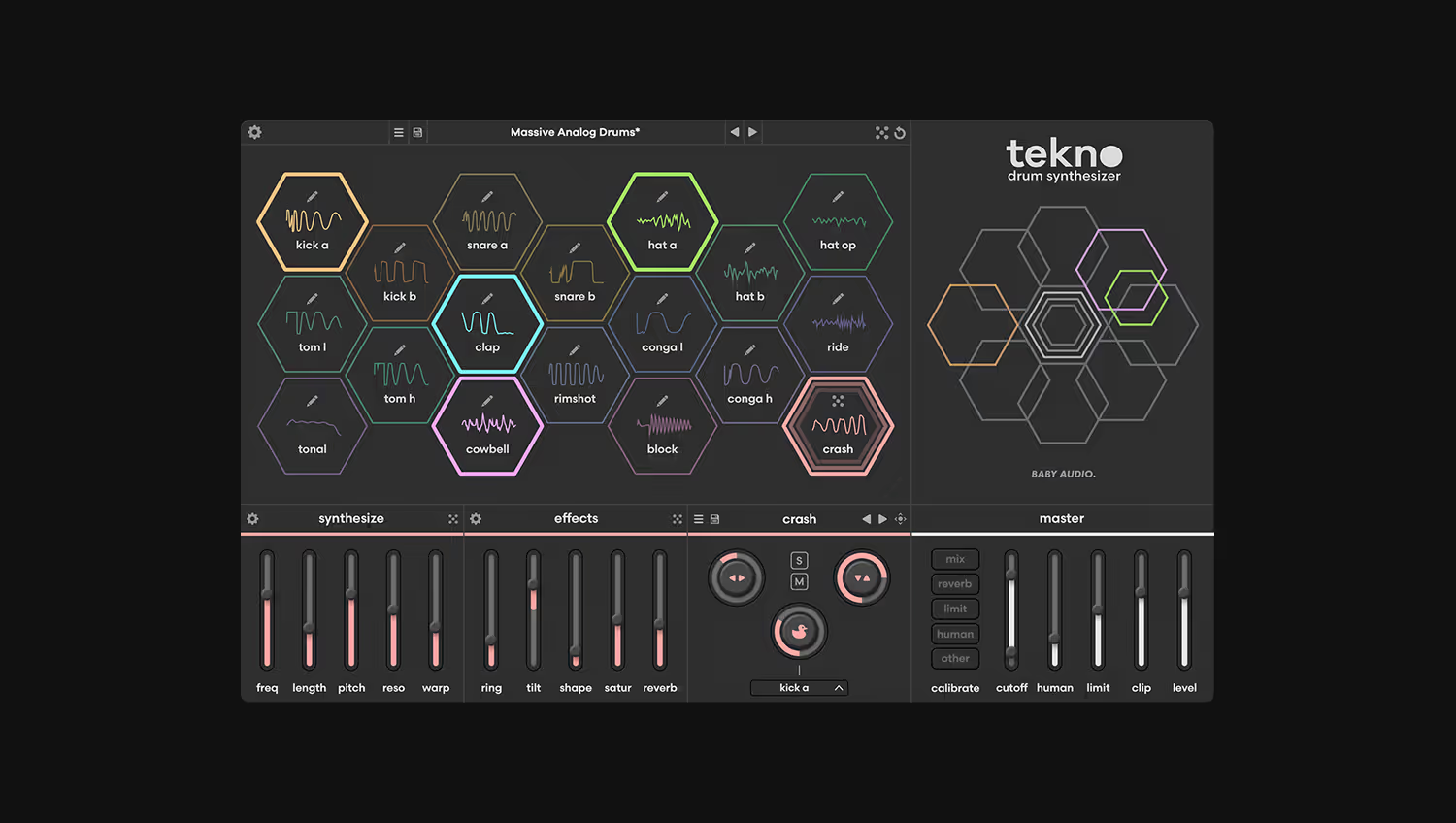
In fact, the V1.1 update to our flagship drum synthesizer Tekno includes a brand-new sequencer with classic 16-step sequencing for instant beat inspiration.
Combining Tekno’s hard-hitting analog-inspired drum voices with this powerful new sequencer turns it into a total beat workstation that will have you building perfect patterns in minutes.
Check out this overview to get a taste of what next-gen drum sequencing can do:
Sequencers aren’t just about inputting notes, they can be creative tools in their own right.
For example, Tekno’s onboard sequencer includes the ability to shorten individual instrument lanes. Shortened lanes restart at the beginning when the playhead reaches them, allowing them to run independently of the main 16-step sequence.
The result is a quick and intuitive way to create polyrhythmic patterns that evolve over time. It’s worth a try if you’re looking for a way to get started with polyrhythms.
Throughout music history, sequencers have helped artists explore musical possibilities that arise from their specific quirks.
For example, the Roland TB-303 was originally created for musicians to add accompanying basslines while performing with the TR series drum machines.
But its sequencer is now best known for producing the characteristic gurgling melodic lines of acid techno.
Every sequencer has quirks that can become unique creative outcomes if you’re willing to explore the possibilities.
Many sequencers support a robust form of randomization that can help you break creative blocks.
If you find your patterns getting predictable or stale when you enter them manually, randomization can give you fresh material to work with at the click of a button.
Tekno’s smart randomization gives you usable, musical results every time you randomize a lane or even the entire sequence. It’s a great way to get instant variations on your patterns or quickly add new voices to your beat without tedious programming.
Tekno’s onboard sequencer can even add an element of probability into your beats. By reducing the “chance” parameter to values lower than 100%, you introduce the possibility that a hit will not play when the playhead reaches it.
This can make a busy pattern into an endless series of unique variations that barely ever repeat the same way twice.
One of the best ways to work with sequencers is by pairing them with other functions in your DAW to introduce change over time to the pattern.
This is most common in the world of hardware sequencers, where CV inputs can accept modulation signals from standard sources like envelopes, LFOs, switches and more.
One of the classic examples is the so-called “ratcheting” effect popularized by Tangerine Dream in the 1970s.
By using an external device to multiply the clock signal rate during certain steps, ratcheting introduces rhythmic punctuations that make the sequence feel dynamic and alive.
You can achieve a similar effect with Tekno’s 32nd note tool. Engage it by clicking the 32nd note icon in the sequencer tools menu and click any step to add two hits in the space of one 16th note step.
This can help you create rapid fire hits, grace notes and other types of rhythmic accents to keep your sequences from feeling too uniform.
Sequencers played an important role in the development of electronic music and production tools.
From the earliest days of modular to the most sophisticated modern DAWs, most musicians interact with a sequencer in some form during the creation of their tracks.
Whether you’re looking for the hypnotic cascading melodies of the Berlin school pioneers or modern hard-hitting drum patterns, sequencers can inspire you when you’re tired of entering MIDI by hand.
Check out Tekno now to see what a great drum sequencer can do in your own tracks.
Tekno combines authentic analog circuit modeling with cutting edge modern techniques for the heaviest synthesized drums ever. With curated effects, a beat-slamming master section and deep sound capabilities, Tekno can go from vintage to modern with a sound all its own.


.png)
.avif)